
AI agents in operations: where they earn their place
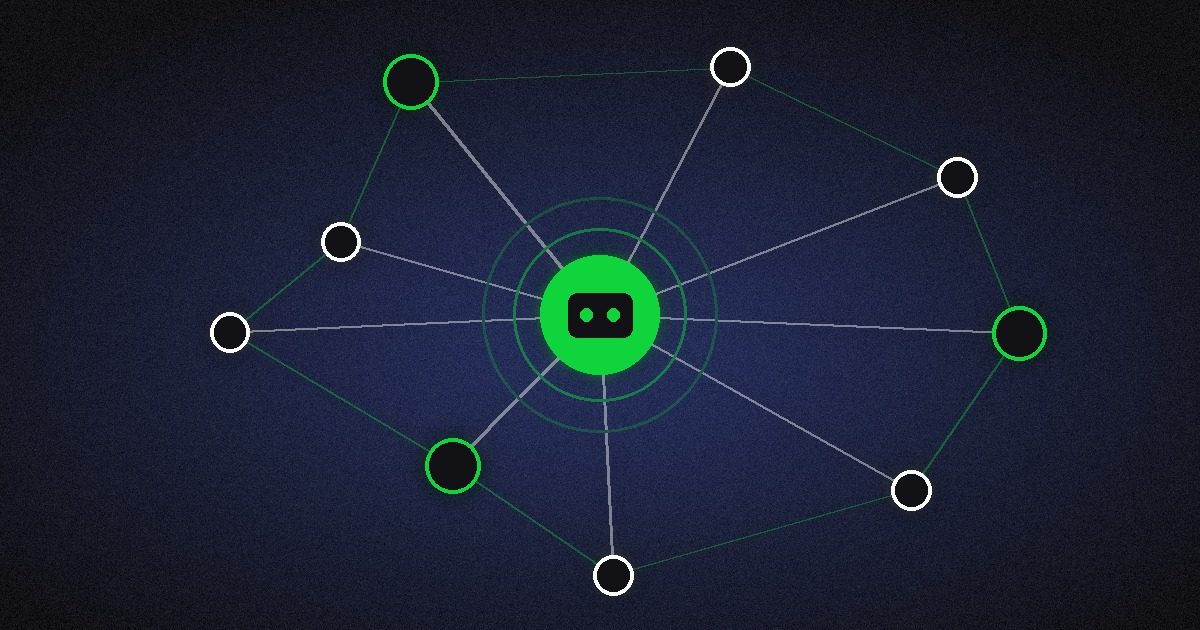
Most of the conversations we have with business owners about AI agents start in the same place. They have seen the demos, they have been sold a vision of autonomous software running whole departments, and they want to know what is real. Over our last few interview episodes, the guests building these systems gave remarkably consistent answers. Agents are useful in specific places, and the design around them matters more than the model inside them.
Repetitive work does not need an agent
Dr Andreas Koeberl, co-founder of Autonomous Minds, the company behind milo.ai, made a point in EP110 that we think every buyer should hear. If something gets triggered and you always take the same action, he said, "You don't need AI for that." Rule-based automation has handled that kind of work for twenty years, and it is cheaper and more predictable.
Where Andreas sees agents adding value is in acting on what the data shows. His example was churn. A traditional BI tool tells you the pipeline is trending down. What a manager wants to know is why, and what to do about it. milo.ai is built to spot a pattern such as a churn risk and trigger an operational action straight away, which moves analytics out of the dashboard and into day-to-day decisions.
He was also clear about the limits. With qualitative work, like drafting a marketing plan, a small share of hallucinated content may not matter much. With numbers, it does. When the system labels data, for instance three different fields that might all be called revenue, a person still has to check it. His advice on vendors who promise otherwise was short: he wouldn't trust them.
Put the rules in charge
Philip Young, co-founder and CEO of Garfield AI, gave the clearest description we have heard of how to build an agent you can rely on. Garfield is a regulated law firm in England and Wales that helps businesses recover unpaid invoices of up to £10,000. In EP111 he explained that the system is a hybrid: a deterministic expert system sits above the LLM components, and "the expert system is in charge."
The language models do what they are good at, such as inference. Around them, Philip said, the team built a great many guardrails on what the models can and cannot do and say. For a regulated legal service that is the only sensible design at the current state of the technology, and we would argue the same applies to any process where a wrong answer has a cost.
He described three advantages over the traditional, people-heavy way of doing this work: cost, consistency and convenience. The convenience point surprised him. A noticeable number of users check on their cases at three in the morning, a time when human lawyers, as he put it, have to sleep.
For an operations team, the lesson is to write down the rules, the approvals and the hand-offs first, and give the agent a defined job inside them.
Fewer screens for the people doing the work
Martin Kraft of DRUID AI looked at agents from the employee's side in EP109. He cited a study suggesting the average person in a digital role works across about a dozen applications, and the top performers across twenty or more, from Workday to SAP modules. His view is that a conversational layer can sit across those systems so that people ask for what they need in plain language, and the agent then takes the action as well as giving the answer.
His example was a large US university where thousands of students use a DRUID agent during onboarding to find out where to register for a course or get their timetable. Onboarding of staff, customers or tenants raises the same repeated questions in almost any SME, and the answers sit across several systems.
Know what the agent can reach
The governance side came up in our conversation with Theodore Bergqvist of Turbotic in EP113. Theo expects agents to become a big part of how work gets done, but he also said that not all processes or functions need agents, and warned against overspending on something that is not mature yet. He pointed out that an agent differs from an RPA bot in where it goes. Agents can reach outside your own systems and your own domain, so you need to know what data they use, where it comes from, where it goes and what the risk is at each step. That makes them harder to put in place properly than a bot, and more expensive if you skip the thinking.
A practical way in
Taken together, our guests point to a fairly sober approach for an SME or operations team:
- Pick a process where judgement or messy input is the bottleneck. Leave the purely repetitive steps to ordinary workflow automation.
- Map the rules and exceptions before you choose a tool, and make those rules the part that is in charge.
- Decide where a person checks the output, and make that step quick.
- List every system and data source the agent can touch.
- Measure it against the process as it ran before.
Agents are a real step forward for operations, and the firms getting value from them treat them as one part of a well-understood process.
Listen to the episodes
- EP110: Turning Insights into Action with GenBI, with Dr Andreas Koeberl, milo.ai
- EP111: TAG x Garfield AI, with Philip Young, co-founder and CEO of Garfield AI
- EP109: Conversational Business Applications, with Martin Kraft, DRUID AI
- EP113: The Democratization of Automation for Mid-size companies, with Theodore Bergqvist, Turbotic
If you are working out where agents fit next to the tools you already have, the free Automation Stack Field Guide walks through it.
Pick the layer before you pick the product.
- An eight-layer map of the stack, plus the governance that sits across it
- When to reach for each layer, when to think twice, and what to ask the vendor
- A symptom table, vendor scorecard and quarterly checklist
Free PDF. Instant download.
More from the blog

Map the process before you hand it to an AI agent
Process mapping still decides whether automation and AI agents work. Six ways to capture a process, how to run the sessions, and where process mining helps.
Read article
Intelligent document processing: what invoice automation really involves
Intelligent document processing for invoices: why templates struggle, what good validation looks like, and how to build IDP into the wider workflow.
Read article
When the spreadsheet becomes the system: signs it is time for case management
The signs a spreadsheet has become your system of record, when a better spreadsheet is enough, and when to move the work into case management software.
Read article